Breaking News — Six wind farms, two large-scale solar-battery hybrid facilities, and multiple long-duration battery storage systems with seven- to eight-hour capacities have emerged as winners in the latest round of Capacity Investment Scheme (CIS) tenders, marking a significant step toward replacing coal-fired power ahead of scheduled plant closures.
Industry sources confirm that the successful projects collectively represent over 2.5 gigawatts of new renewable generation and more than 1.8 gigawatt-hours of battery storage, signaling a rapid shift in Australia's energy mix. The tenders were heavily oversubscribed, reflecting strong investor confidence in the viability of renewable and storage technologies.
Key Tender Results
- Wind farms: Six projects across New South Wales, Victoria, and Queensland, totaling 1.3 GW of capacity.
- Solar-battery hybrids: Two large-scale facilities combining 500 MW of solar with 400 MW/3,200 MWh of battery storage.
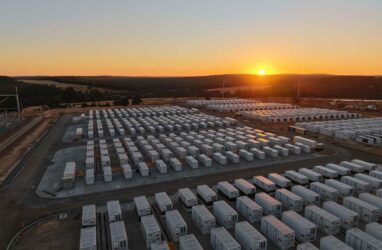
- Long-duration batteries: Several standalone systems offering 7–8 hours of discharge, including a 200 MW/1,600 MWh project in Victoria.
“This tender outcome demonstrates that renewable energy paired with storage is now a reliable and cost-effective alternative to coal,” said Dr. Emma Clarke, energy market analyst at the Australian Energy Council. “The addition of long-duration batteries directly addresses concerns about intermittency.”
Background
The Capacity Investment Scheme was launched by the Australian government to underwrite new renewable generation and storage, aiming to ensure grid reliability as several coal-fired power stations near retirement. The latest tender round was specifically designed to replace capacity from the Liddell and Vales Point coal plants, both slated for closure by 2025–2028.

CIS contracts guarantee a minimum revenue floor for project developers, reducing financial risk and accelerating project financing. According to the Australian Renewable Energy Agency (ARENA), this approach has already unlocked over $8 billion in private investment since the scheme’s inception.
What This Means
The successful bids underscore a fundamental shift in Australia’s energy landscape: coal is no longer the cheapest or most reliable option for baseload power. With seven- and eight-hour batteries, renewable energy can now cover evening peak demand—a key vulnerability for solar-heavy grids.
“These results prove that clean energy can deliver around-the-clock reliability,” said Professor Mark Townsend, director of the Energy Policy Institute at the University of Sydney. “We are seeing the blueprint for a post-coal grid emerge in real time.”
However, analysts caution that transmission upgrades and community engagement remain critical to prevent bottlenecks. The CIS tenders include provisions for grid connection studies and local benefit-sharing, but experts say more work is needed on zoning and approvals.
— Additional reporting by Renew Economy (source: original article).