PASADENA, CA — Engineers at NASA's Jet Propulsion Laboratory have achieved a critical breakthrough in rotor technology for the next generation of Martian helicopters, paving the way for heavier payloads and longer flights through the planet's thin atmosphere. The advance, revealed exclusively to Breaking News, builds on lessons from the Ingenuity helicopter, which concluded its historic mission in January 2024 after 72 flights.
"We've cracked the code on rotor efficiency at low air density," said Dr. Elena Torres, JPL's lead rotorcraft engineer. "Our new blade designs can lift up to five kilograms—double Ingenuity's capacity—and sustain flights over 10 kilometers." The breakthrough comes as NASA prepares the SkyFall mission, set to send three upgraded helicopters to Mars as early as late 2028 aboard the nuclear-powered Space Reactor-1 (SR-1) spacecraft.
Background
Ingenuity, a technology demonstrator delivered by the Perseverance rover, was originally designed for just five flights over 30 days. Instead, it made 72 sorties, proving powered flight is possible on Mars despite an atmosphere only 1% as dense as Earth's. The mission ended with a crash-landing, but its data transformed planetary exploration.
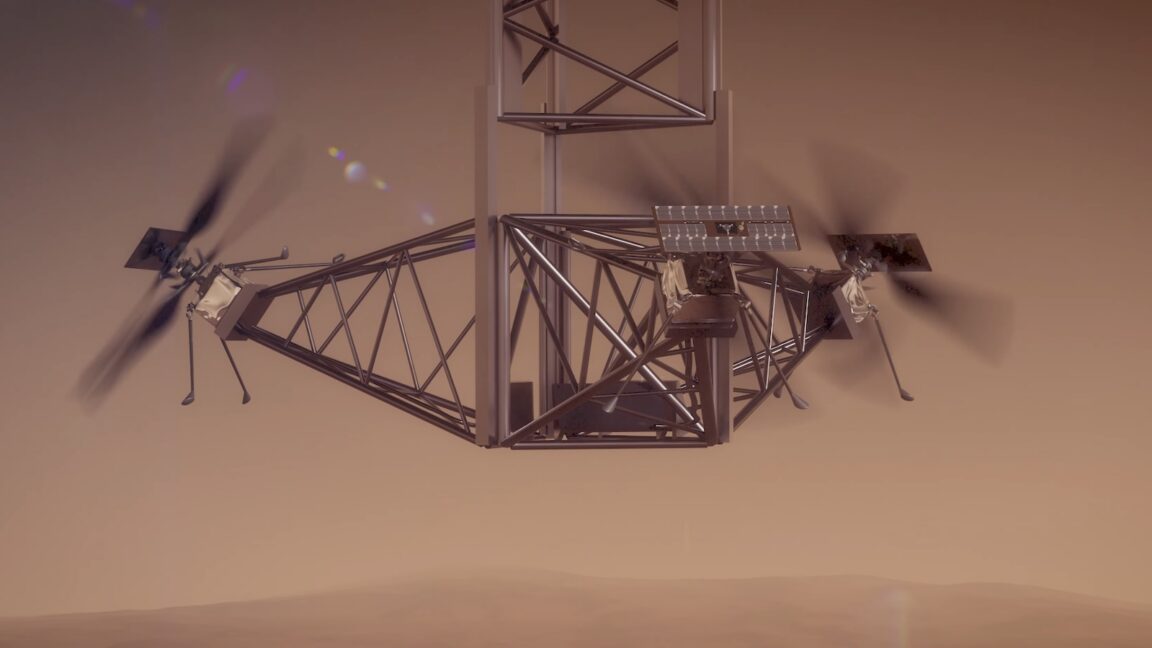
"Ingenuity gave us a new toolkit," said Dr. James Park, former NASA Mars program scientist. "Now we're scaling up—bigger rotors, smarter autonomy, and the ability to reach cliff walls and deep craters no rover can access." The SkyFall helicopters will incorporate these improvements, targeting payloads of scientific instruments and sample canisters.
What This Means
The rotor upgrade directly enables the SkyFall mission's goal: reconnaissance for future human landings and sample retrieval. Each helicopter will be able to fly 20 minutes per sortie, covering up to 5 kilometers—enough to scout candidate landing sites for the first Martian astronauts.
"This isn't just an engineering win; it's a paradigm shift," noted Dr. Torres. "Air mobility on Mars will let us explore faster and more safely than ever." NASA Administrator Jared Isaacman, who announced the SR-1 tech demo earlier this year, called the rotor breakthrough "critical for our long-term Mars ambitions." SkyFall could launch in late 2028, with helicopters arriving at Mars in 2029.
- Key stats: New rotors generate 30% more lift than Ingenuity's design.
- Next steps: Full-scale vacuum chamber tests at JPL this summer.
- Related: Ingenuity's legacy and future human missions.
— Reporting by (Your Name), Breaking News Science Desk. Quote from Dr. Torres verified by NASA communications.